 Reviews


 Proudly American


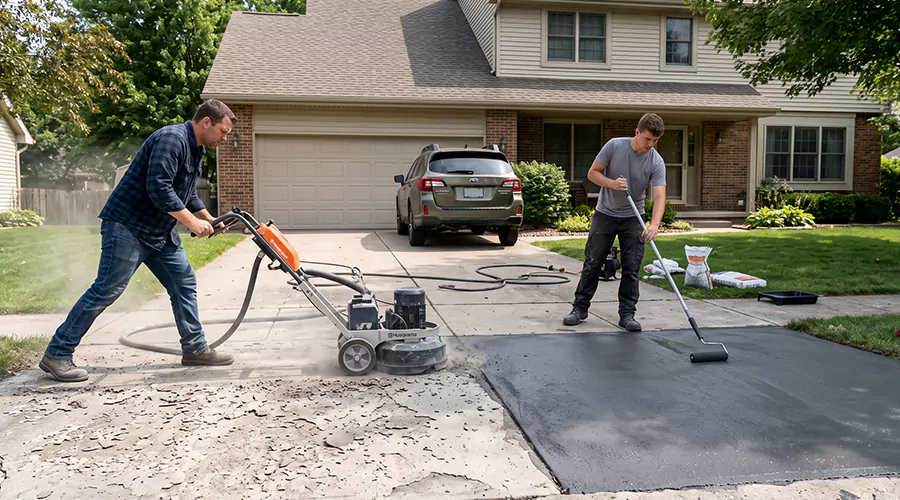
Resurfaced concrete usually peels or flakes because the overlay did not bond well to the original slab or moisture is pushing against the new surface. Water damage ceiling repair may be needed when moisture from leaks has also damaged ceilings or surrounding materials. Poor preparation is the most common cause. Active cracks or weak concrete below the overlay can also make a new finish fail early.
A resurfacing layer depends on the existing slab for support. If that base is dirty or unstable, the new layer can separate even when the overlay material is sound.
What Causes Resurfaced Concrete to Peel?
Peeling usually starts when the bond between the old slab and the new overlay becomes weak. Oil or old sealer can prevent proper adhesion. Dust left after grinding can create the same problem.
Common causes include:
- The old surface was not prepared enough.
- Paint or sealer remained on the slab.
- Loose concrete was covered instead of removed.
- Moisture moved upward through the slab.
- Active cracks continued moving.
- The overlay dried too quickly.
- The product was applied outside its recommended thickness.
- The slab settled after resurfacing.
Concrete restoration works best when these problems are corrected before a new surface is applied.
Why Does Surface Preparation Matter?
Surface preparation gives the overlay a clean and rough base to grip. Pressure washing may remove dirt but can leave coatings or weak cement paste behind. Mechanical grinding or another suitable method may be needed when the surface is sealed or badly worn.
| Surface Condition | Likely Result |
|---|---|
| Clean and properly profiled | Stronger bond |
| Dust remains | Weak adhesion |
| Old sealer remains | Peeling |
| Loose concrete remains | Flaking |
| Oil remains | Local bond failure |
A new overlay cannot become stronger than the material it is attached to.
Can Moisture Make an Overlay Flake?
Yes. Moisture vapor can move through concrete from below and collect beneath a coating or dense overlay. Pressure can weaken the bond. White mineral deposits near peeling areas can also show that moisture has moved through the slab.
Freeze and thaw cycles may worsen outdoor damage when trapped water expands.
A moisture problem should be investigated before the failed area is covered again.
Can Cracks Cause Resurfacing Failure?
Cracks can damage a resurfaced surface when the original slab continues moving. A thin overlay may cover a repaired stable crack, but it cannot stop settlement below it.
Look closely at the crack:
- A level crack is more likely to be a surface issue.
- A crack with one side higher suggests movement.
- A widening crack suggests continued change.
- A crack beside a sunken area can point to base failure.
Concrete patio resurfacing is a better option when the slab is stable and the damage is mainly cosmetic.
Why Does New Concrete Sometimes Flake Early?
Early flaking can happen when the overlay loses moisture too quickly or is mixed incorrectly. Hot weather can speed evaporation. A very dry base may also pull water from some cement-based products before they develop the intended bond.
Early failure can also happen when too much water is added or the overlay is placed over contamination. Rain before curing can create another problem. Heavy traffic before the surface is ready can also shorten its life.
The manufacturer's application instructions should control mixing and curing.
How Can You Tell Peeling From Normal Wear?
Ordinary wear develops gradually across traffic areas. Bond failure often produces hollow spots or sections that lift from the original concrete.
| Sign | More Likely Cause |
|---|---|
| Smooth worn path | Normal wear |
| Small impact chips | Local damage |
| Hollow sound | Delamination |
| Sheets lifting at edges | Bond failure |
| White deposits | Moisture movement |
| Cracks matching old cracks | Movement below |
A light tap with a plastic handle can reveal hollow areas. Compare the sound with a firmly bonded section.
Can Peeling Resurfaced Concrete Be Repaired?
Small isolated failures can sometimes be repaired if the surrounding overlay remains firmly bonded. Failed material must be removed back to a sound edge. The original concrete then needs proper preparation before compatible repair material is applied.
Widespread peeling is different. Patching many loose sections can leave weak material between the repairs. A larger concrete restoration project may require removing the failed overlay and correcting the original cause.
How Much Can the Repair Cost?
In 2026, basic concrete resurfacing commonly costs about $1,000 to $5,000 for many residential projects. The concrete resurfacing cost rises when an old failed overlay must be removed or cracks need repair before a new application.
| Work Needed | Cost Effect |
|---|---|
| Small local patch | Lower |
| Surface grinding | Moderate |
| Failed overlay removal | Higher |
| Crack repair | Higher |
| Moisture correction | Higher |
Repairing the cause is usually less expensive than resurfacing the same failing base twice.
What Can You Check Yourself?
A sound and crack check can help show whether failure is local or widespread.
- Mark visible peeling areas.
- Tap around each spot with a plastic handle.
- Mark sections that sound hollow.
- Check cracks for height differences.
- Look for white mineral deposits.
- Photograph the same areas after several weeks.
Do not pry up firmly bonded sections just to test them.
When Should You Call a Professional?
Professional assessment is useful when peeling covers a large part of the slab or the cause appears to be settlement. Moisture problems also need closer evaluation before another coating is applied.
Consider professional help when:
- Large areas sound hollow.
- One side of a crack sits higher.
- The slab is sinking.
- Water repeatedly appears beneath the coating.
- Previous repairs have failed.
- Reinforcement is exposed.
How Can You Prevent Peeling?
Long life starts before the overlay is installed. The slab should be stable and weak surface material should be removed.
- Keep drainage from flowing toward the slab.
- Clean spills before they soak in.
- Repair new stable cracks early.
- Reseal every two to five years when required.
- Avoid harsh deicing chemicals on vulnerable surfaces.
- Follow the curing schedule before heavy use.
Conclusion
Resurfaced concrete peels or flakes most often because the overlay lost its bond to the original slab. Poor preparation and moisture are common causes, while settlement can make the problem return after repair. Small isolated areas may be patchable. Widespread delamination needs a closer look at the slab below. Before resurfacing again, identify why the first surface failed.
Frequently Asked Questions
Can peeling concrete be resurfaced again?
Yes. Failed material must be removed first and the original slab must be stable enough for a new overlay.
Why does resurfaced concrete sound hollow?
A hollow sound can indicate that part of the overlay has separated from the slab below.
Can water cause resurfacing to peel?
Yes. Moisture vapor or repeated water entry can weaken the bond beneath some overlay systems.
Will sealer stop an overlay from peeling?
No. Sealer protects a sound surface but cannot repair an overlay that has already lost its bond.
Does every crack cause resurfacing failure?
No. Stable small cracks can often be repaired. Moving cracks are more likely to reappear.
How long should resurfaced concrete last?
Many resurfaced surfaces last about 5 to 12 years. Good preparation and maintenance can extend that period.